
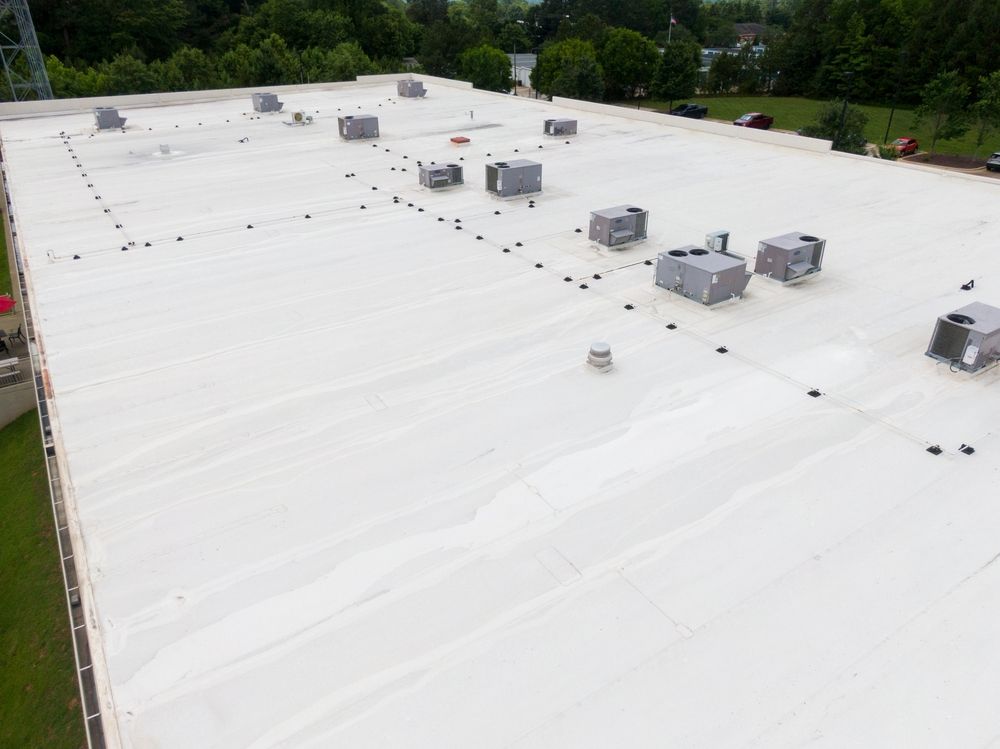
Flat Roof Solutions That Address Water Management
Flat Roof Systems and Roof Coatings in Bismarck for commercial properties and buildings with low-slope roofing showing leaks or surface deterioration
Low-slope and flat roof systems require specialized approaches distinct from steep-slope residential roofing, with performance depending on membrane integrity, drainage design, and proactive maintenance. Singh Contracting, Inc. provides flat roof inspection, repair, replacement, and coating services tailored to the existing system type and building requirements. Whether your property uses EPDM, TPO, modified bitumen, or built-up roofing, the service approach begins with identifying the current system, documenting its condition, and determining whether localized repairs, coating applications, or full replacement best addresses the problems your roof exhibits.
Flat roof evaluation examines membrane seams, flashing around penetrations and edges, drainage performance, and substrate condition beneath the surface layer. Ponding water—standing water remaining more than 48 hours after rain—indicates drainage problems that accelerate deterioration and stress roof structure. North Dakota's freeze-thaw cycles compound these issues, as trapped water expands when frozen, forcing seams apart and creating pathways for leaks that worsen each season. Coating applications restore surface protection when membranes show wear but remain structurally intact, while replacement becomes necessary when substrates fail or widespread damage compromises system performance.
Schedule a flat roof evaluation when you notice recurring leaks, visible membrane cracking, ponding water, or interior ceiling stains following precipitation events.
How Flat Roof Systems Perform
Flat roof systems rely on continuous membranes, properly sealed seams, and positive drainage to prevent water intrusion. Repair work targets specific problem areas—damaged seams, punctures, failed flashing—when the overall membrane remains functional. Roof coatings provide an alternative to replacement by adding a seamless protective layer over the existing system, extending functional life and improving weather resistance when applied to eligible substrates. Replacement becomes the recommended approach when multiple system components have failed, substrates show rot or structural compromise, or the roof has exceeded its expected service life.
After flat roof work is completed, you'll observe that ponding water drains within the expected timeframe, interior leaks cease following rain or snowmelt, and membrane surfaces appear uniform without visible gaps, blisters, or separated seams. Properly functioning flat roofs channel water toward drains and scuppers without allowing accumulation in low spots, and coating applications provide renewed surface integrity that resists UV degradation and weather exposure.
Maintenance considerations matter for flat roof longevity. Regular debris removal, drain clearing, and periodic inspections identify emerging problems before they escalate into major leaks or structural damage. Weather exposure, foot traffic from equipment service, and installation quality all affect how long a flat roof system performs before requiring intervention. Proactive attention extends functional life and reduces the likelihood of sudden failures that disrupt building operations.
Flat Roof Questions from Property Owners
Flat roof systems present specific challenges and maintenance requirements unfamiliar to property owners accustomed to residential steep-slope roofing. These answers clarify common concerns about low-slope roof performance and service options.
What causes ponding water on flat roofs?
Inadequate slope toward drains, sagging roof decking, settled insulation, or clogged drains all contribute to ponding. Flat roofs should have minimum slope—typically one-quarter inch per foot—to ensure positive drainage. Ponding accelerates membrane wear and creates freeze-thaw damage risks during Bismarck winters.
When are roof coatings a suitable option?
Coatings work best on flat roof systems with intact substrates, sound membrane attachment, and surface wear that hasn't progressed to leaks or structural damage. The existing roof must be clean, dry, and compatible with the coating material. Coatings cannot repair failed substrates or fix drainage problems.
How do you identify the existing flat roof system type?
Visual inspection reveals membrane appearance, seam configuration, and surface texture that indicate system type. EPDM membranes are black rubber with visible seams, TPO membranes are white or tan thermoplastic with heat-welded seams, and built-up roofs show gravel or smooth surfaces over layered asphalt. Accurate identification is essential for determining compatible repair and coating materials.
Why do flat roofs require different maintenance than sloped roofs?
Flat roofs accumulate debris, standing water, and snow loads that sloped roofs shed naturally. Drain maintenance, membrane inspection, and seam monitoring prevent small problems from becoming major leaks. Foot traffic from equipment service also creates wear patterns requiring attention.
What determines whether flat roof replacement is necessary?
Replacement becomes appropriate when membrane systems show widespread deterioration, substrates are compromised by water damage, drainage problems require structural correction, or repair costs approach replacement value. Age alone doesn't dictate replacement—condition and performance history guide the decision.
Singh Contracting, Inc. provides flat roof system evaluation, repair, replacement, and coating services for commercial and low-slope properties. Arrange an inspection when your flat roof exhibits leaks, drainage concerns, or visible deterioration to determine the most effective solution for your system's condition.