
Commercial Roof Systems That Minimize Disruption
Commercial Roofing in Bismarck for businesses and property managers addressing repair needs, system replacement, or storm-related damage
Commercial roofing work differs from residential projects in scope, material systems, access logistics, and the need to maintain operations during construction. Singh Contracting, Inc. provides commercial roofing services that address the specific requirements of business properties—flat or low-slope roof systems, coating applications, storm damage repair, and full replacement planned around operational schedules. Evaluating the existing roof system, building use, and performance priorities comes before recommending a solution, ensuring the approach matches both immediate problems and long-term facility needs.
Commercial roof work begins with system evaluation: identifying the existing membrane or built-up roof type, assessing drainage performance, inspecting flashing and penetration seals, and determining whether deterioration is localized or widespread. Repair work targets specific problem areas when the overall system remains functional, while replacement becomes necessary when multiple failures, extensive leaks, or aged materials compromise building protection. Roof coatings extend functional life on systems showing surface wear but structurally sound substrates, providing an alternative to full replacement when conditions allow.
Arrange an evaluation when your commercial roof shows recurring leaks, visible membrane damage, or interior evidence of water intrusion.
What Commercial Roof Service Involves
Commercial roofing requires coordinating material selection, access equipment, weather windows, and work scheduling to minimize impact on building operations. Flat roof systems—common in commercial construction—demand careful attention to drainage design, seam integrity, and flashing details around HVAC units, vents, and roof-mounted equipment. North Dakota's temperature extremes and snow load requirements influence material choices and installation methods.
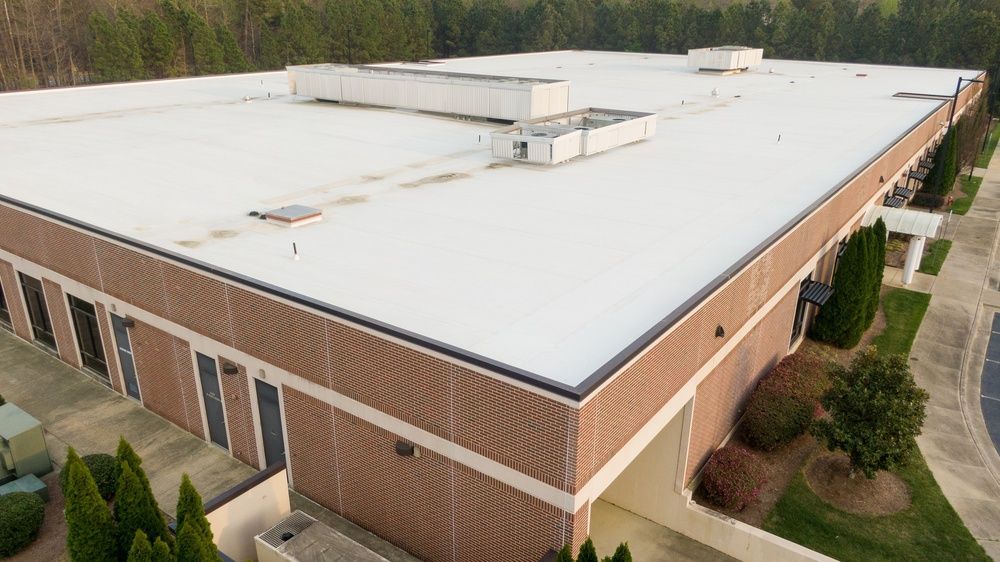
After commercial roof work is completed, you'll see uniform membrane surfaces without ponding water, sealed penetrations around equipment and drains, and restored weather protection that keeps interior spaces dry during rain and snowmelt events. Properly executed flat roof installation directs water toward drains without creating low spots where standing water accelerates deterioration, and coating applications provide renewed surface protection that extends the existing system's functional life.
Work planning considers building occupancy, inventory protection, and operational constraints. Phased approaches allow portions of the building to remain fully functional while work proceeds on isolated sections, reducing disruption compared to simultaneous whole-roof projects. The schedule accounts for material delivery lead times, weather-dependent installation requirements, and inspection milestones.
What Commercial Property Managers Ask
Commercial roofing decisions involve evaluating repair versus replacement, managing costs, and maintaining building operations. These questions address the considerations specific to business properties and facility management.
How do you determine whether a commercial roof needs repair or replacement?
The assessment considers system age, leak frequency and location, membrane condition, substrate integrity, and whether previous repairs have succeeded. When leaks are isolated and the membrane shows limited wear, targeted repairs may suffice. Widespread deterioration or failed substrates typically require replacement.
What are roof coatings and when are they appropriate?
Roof coatings are liquid-applied membranes that restore surface protection on existing flat roof systems. They're suitable when the substrate remains structurally sound but surface wear or minor cracks threaten water intrusion. Coatings extend functional life and defer replacement costs when applied to eligible systems.
How is work scheduled to minimize business disruption in Bismarck?
Projects are phased to isolate work zones, scheduled during off-hours or seasonal low-activity periods when possible, and coordinated around weather conditions that allow safe installation without exposing the building to water intrusion during construction.
What makes flat roof drainage important?
Flat roofs rely on positive drainage to prevent ponding water, which accelerates membrane deterioration, stresses roof structure, and creates leak risks. Properly designed systems slope toward drains and scuppers, ensuring water clears the roof surface within 48 hours of precipitation.
Why does commercial roofing require different materials than residential?
Commercial buildings often have larger uninterrupted roof areas, lower slopes, and equipment loads that residential roofs don't encounter. Membrane systems, built-up roofing, and coatings are designed for these conditions, providing flexibility, durability, and accommodation for rooftop equipment that asphalt shingles cannot match.
Singh Contracting, Inc. addresses commercial roofing needs including repair, replacement, coating, and storm damage response for business properties. Schedule an evaluation to review your roof system's condition and discuss solutions tailored to your building and operational requirements.